Lost in Translation? Why Japanese Adult Content Hits Different for American Viewers
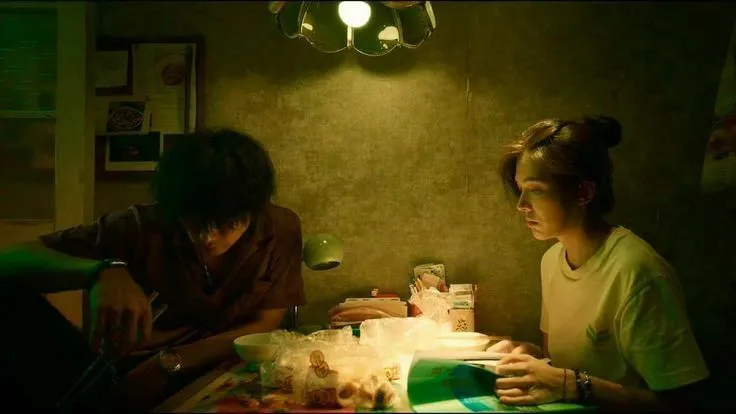
Photo: Japanese cinema aesthetic soft lighting film still, via i.pinimg.com
If you've ever sat down with a Japanese adult title and felt like you were watching something from a completely different planet compared to mainstream American productions, you're not imagining things. The differences run deep — deeper than language, deeper than aesthetics. They're rooted in cultural DNA, and once you start noticing them, you can't unsee them.
At JapanAdalt, we spend a lot of time thinking about what makes Japanese adult content tick for an American audience. So let's actually dig into it.
Storytelling Isn't an Afterthought
One of the first things longtime fans mention when they talk about Japanese adult content is the setup. American productions have historically been pretty no-nonsense about getting to the action — the "plot" is famously thin, a punchline rather than a feature. Japanese productions take a noticeably different approach.
Narrative in Japanese adult content often functions as genuine emotional scaffolding. You'll find slow-burn scenarios, character dynamics that carry real tension, and dialogue that's meant to build atmosphere rather than just fill dead air. This isn't universal, obviously — there's plenty of Japanese content that's purely transactional — but the culture of storytelling in Japanese media generally bleeds into its adult sector in a way that doesn't have a clear American equivalent.
For US viewers, this creates an interesting friction. You're watching something where the emotional buildup actually matters to the scene's payoff. Whether you're reading subtitles or relying on a dub, that narrative weight comes through.
The Role of Dialogue and What Gets Lost
Here's where things get genuinely complicated: Japanese as a language does a lot of work that English simply doesn't replicate cleanly. Levels of formality, gendered speech patterns, terms of address — all of these carry layers of social meaning that color every interaction on screen.
When a performer uses a highly formal register in a context that's clearly intimate, that contrast is doing something deliberate. It's creating tension through incongruity, which is a recognized aesthetic device in Japanese media broadly. When that scene gets translated, the subtitler has to make a judgment call: do you preserve the literal formality, which might read as awkward in English, or do you translate the feeling of it, which means making interpretive choices that change the text?
Most subtitle tracks lean toward readability, which means American viewers are often experiencing a smoothed-out version of the original's linguistic texture. That's not a knock on translators — it's just the nature of the beast. But it does mean that fluent viewers and non-fluent viewers are having meaningfully different experiences with the same content.
Aesthetic Choices That Feel Alien — In a Good Way
Beyond language, the visual and tonal language of Japanese adult productions diverges from American norms in ways that are immediately noticeable.
Lighting in Japanese productions tends toward softer, more diffused setups. Skin tones are often treated with a kind of careful deliberateness — almost painterly in some higher-end productions. Compare that to the harsh, clinical lighting that became something of a signature in American productions of the 2000s and 2010s, and you're looking at two completely different visual philosophies.
Pacing is another big one. Japanese productions are often more comfortable sitting in a moment, lingering on reaction shots, building through small details. American productions have traditionally been more rhythm-driven, cutting to maintain energy. Neither approach is objectively better, but they produce very different viewing experiences — and for American audiences encountering Japanese content for the first time, that slower, more deliberate pace can feel surprisingly immersive.
Cultural Context You Actually Need
Some things in Japanese adult content genuinely require background knowledge to fully appreciate. Certain recurring scenarios draw on very specific social contexts — office hierarchies, school settings, the particular social weight of concepts like obligation and restraint — that carry cultural freight American viewers might not automatically pick up on.
This isn't gatekeeping. You don't need a degree in Japanese studies to enjoy the content. But understanding why certain scenarios are structured the way they are — what social tension they're playing with, what taboos they're invoking — adds a layer of comprehension that changes the experience. It's the difference between hearing a joke and actually getting the joke.
For example, the recurring theme of authority and deference in Japanese adult scenarios isn't arbitrary. It maps onto real social structures in Japanese life and gains its charge from that connection. When American viewers respond strongly to these dynamics, they're often responding to something that feels psychologically coherent even if they can't articulate exactly why.
What American Audiences Are Actually Responding To
So what is it, ultimately, that keeps Western fans engaged with Japanese adult content specifically?
Talking to fans and reading community discussions, a few themes come up consistently. Novelty is part of it — there's genuine appeal in content that operates by different rules than what you grew up with. But novelty fades, and the audience for Japanese adult content has remained consistently strong in the US for decades now. That suggests something more durable.
A lot of it comes down to craft. Japanese productions — particularly from established studios — tend to feel considered. There's attention to detail in performance, in visual composition, in the way scenes are structured. That sense of intentionality translates across cultural lines.
And then there's the simple fact that variety has value. American adult content does certain things extremely well. Japanese adult content does other things extremely well. Having access to both — which is easier than ever in the streaming era — just makes the overall landscape richer.
At JapanAdalt, that richness is kind of the whole point. The more you understand about what you're watching and why it works, the more you get out of it.